Hyperopia
(Long-sightedness)

What is Hyperopia?

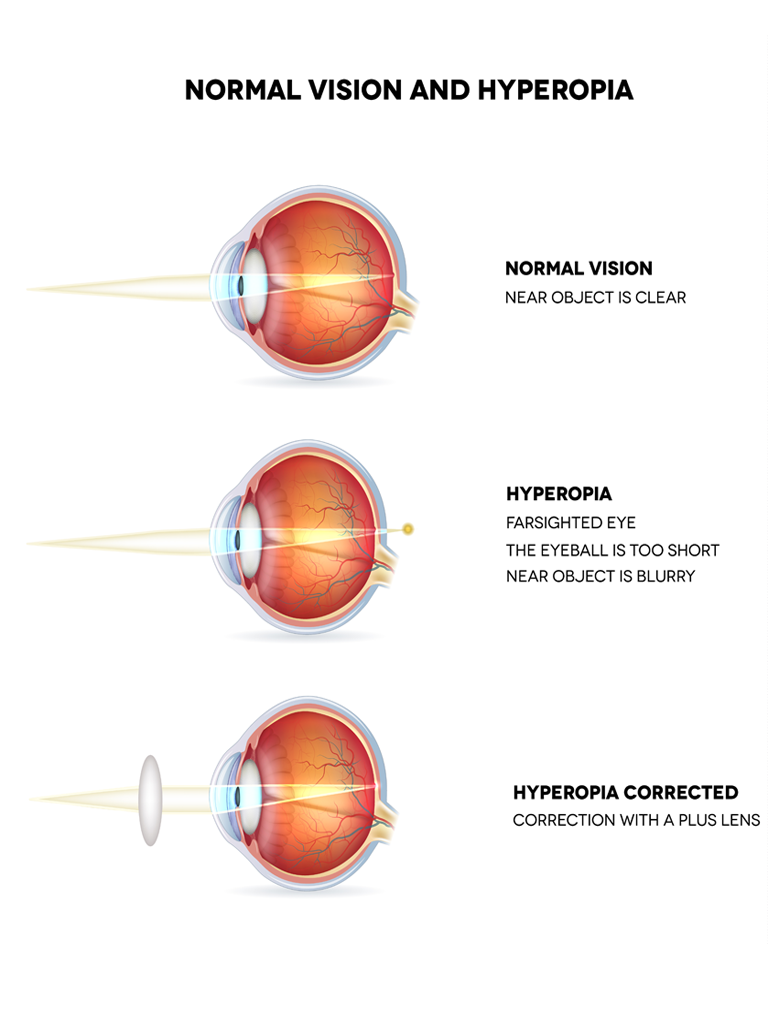
Hyperopia, or long-sightedness, is a refractive error in which distant objects are seen clearly, but near objects appear blurry. This happens because the eyeball is too short, or the cornea is too flat, causing light to focus behind the retina instead of directly on it.

While hyperopia is common in young children, where the eye’s focusing ability is more flexible, significant hyperopia can lead to blurry near vision and cause difficulty focusing on tasks such as reading, writing, or using devices. For children, this may manifest as poor reading ability, eye strain, and headaches.
Signs and Symptoms of Hyperopia

Some of the common signs that may indicate hyperopia in children and adults include:

  • Headaches
  • Blurred vision for near objects
  • Squinting when trying to focus on close-up tasks
  • Difficulty reading, stitching, or other near tasks
  • Eye strain or feeling of heaviness in the eyes

However, not all children with hyperopia will exhibit these signs, making it all the more important to schedule regular eye exams to catch any potential issues early.

Prevalence of Hyperopia

Hyperopia affects a significant portion of the population, with many people not experiencing noticeable symptoms early on. It is more commonly seen in children but can affect adults as well. Studies show that nearly 20-25% of the global population has some degree of hyperopia. Left untreated, significant hyperopia can cause discomfort and potentially affect learning and focus, especially in children.

Genetic Risk Factors for Hyperopia

Just like myopia, hyperopia can run in families. If one or both parents are long-sighted, there’s a higher likelihood that their children will develop hyperopia as well. Genetic factors play a large role in determining the size and shape of the eye, which affects how light is focused.

Early Detection of Hyperopia

Since hyperopia can cause discomfort, headaches, and difficulty concentrating on near tasks, early detection is important. Many children with hyperopia may not complain of blurry vision or may compensate by holding objects at a distance. Regular eye exams are essential in identifying and managing hyperopia early, ensuring that children and adults alike are able to focus comfortably.

What Happens If Significant Hyperopia is Not Corrected?

If significant hyperopia is left untreated, it can lead to further complications such as:

  • Eyestrain or discomfort
  • Esotropia (an in-turning of the eye)
  • Refractive amblyopia (a lazy eye)
  • Learning-related difficulties due to blurry near vision and associated migraines

Children with untreated hyperopia may struggle to concentrate in school, potentially affecting their academic performance. Early treatment can prevent these complications and support proper visual development.

At Eyecare Kids, we’re committed to helping you and your family manage eye conditions like hyperopia. If you have concerns about your child’s vision or if you’re noticing any signs of blurry near vision, don’t wait — book an eye exam today!

FAQs about Hyperopia from Parents and Guardians

No, hyperopia cannot be reversed. Some people will have hyperopia with no symptoms. However, for people who get fatigue, eye strain or blurry vision, corrective glasses or contact lenses can significantly improve vision and comfort when reading. If you cannot wear glasses or want to be independent from glasses, there are refractive surgeries available for hyperopia.

It’s recommended that children have their first eye exam around the ages of 3-4 before they start school. They will generally get a screening done if they are in pre-school. However, this only looks at one aspect of vision. If you have any concerns with your child’s vision and they are younger than 3-4, then we strongly recommend getting their eyes checked with us regardless especially if there is any family history of eye problems.

For children with hyperopia, wearing glasses is essential for clear near vision. They can take breaks during activities that don’t require close focus, like outdoor play or watching TV. However, glasses should be worn for reading, homework, or other close-up activities to prevent eye strain.

Your Child’s Sight is Precious

Good vision is vital for your child’s development, both academically and in their everyday life. Don’t wait for the signs to show up – let our optometrists help you give your child the best chance at clear, efficient vision.